Souvenir Programme · Price Ninety-Nine Cents
Untamed Audio has the honour to present
Reel
Motion Picture Sound
The microphone · The tube · The optical print · The projector · The theatre
Sound from the other side of the screen.

Reel is a motion-picture sound machine. A ribbon microphone, a tube stage, an optical print, a projector, and a cinema - one plugin, the whole chain computed in the order the sound was actually made. Not a tape emulation dressed up as a movie effect, and not a crackle loop laid over the top.
The Programme
-
Wearthe transport
Wow off a warped reel, flutter off the sprocket and the scrape of the transport - and all of it moves together, because it all comes off one machine. This knob is the mechanism getting old.
-
Tonethe optics and the electronics
A ribbon microphone with its proximity bump and presence peak, a tube behind it, the period limiter, and the roll-off the optical track was actually cut to. Narrow, weighted, unmistakably film. This knob is how 1950 the system is.
-
Dirtthe surface of the print
Hiss, grain that rides on the signal rather than under it, and a dense weather of tiny clicks - no two alike, because a uniform click is the single loudest tell that a thing is fake.
-
The Projectorthe slide
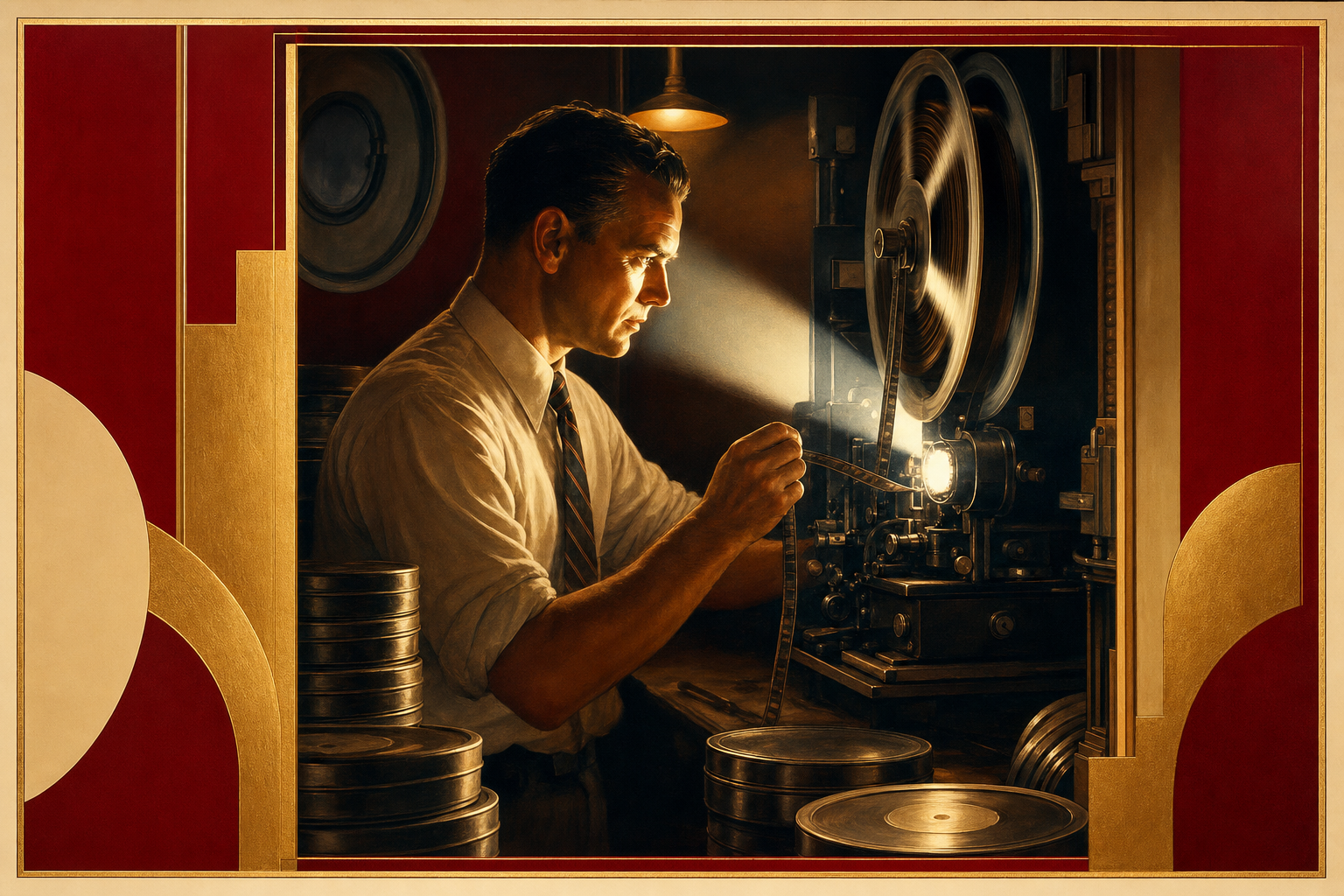
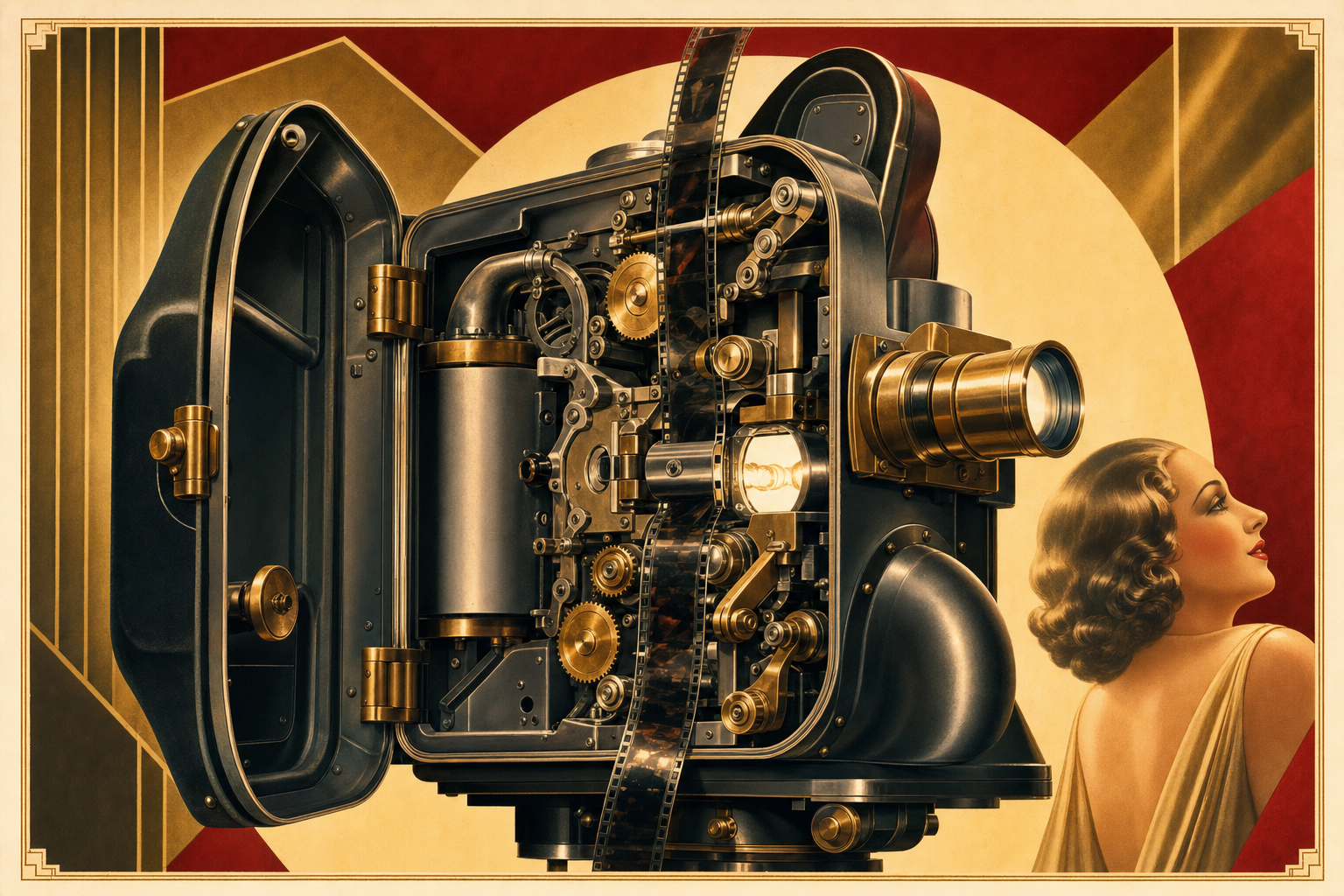
Opens the booth door. Projectors lived behind glass: with the booth closed you hear the print, and when you open the door the machine joins the soundtrack - motor, claw, a little beautiful machinery leaking into the room.
-
The Foottap to bypass, and hold
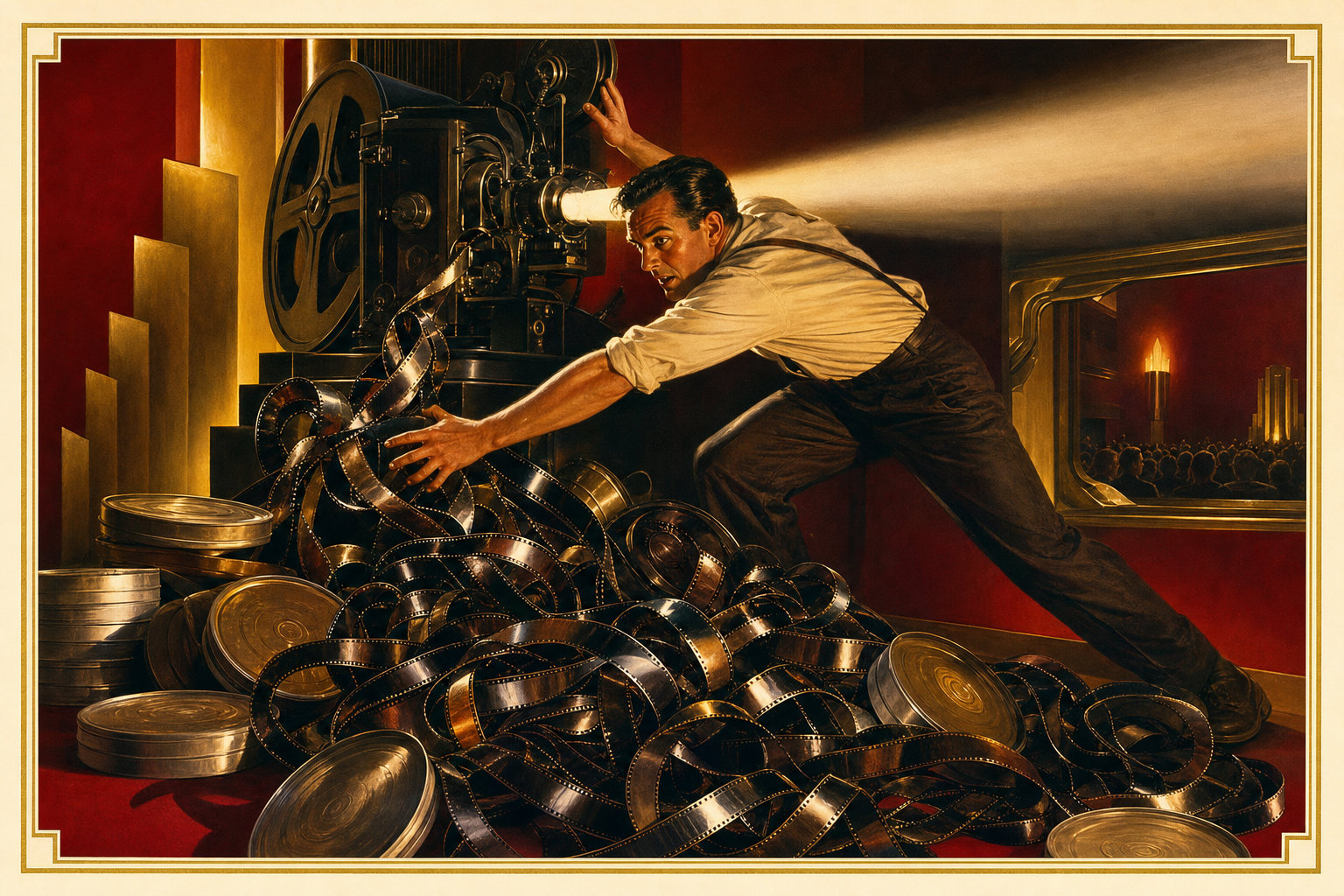
Hold it and the film jams. The motor dies against its own inertia, the pitch and the level sag together like a tape stop, and when you let go it catches up and runs briefly sharp.
-
The Jewelnot listed in any programme
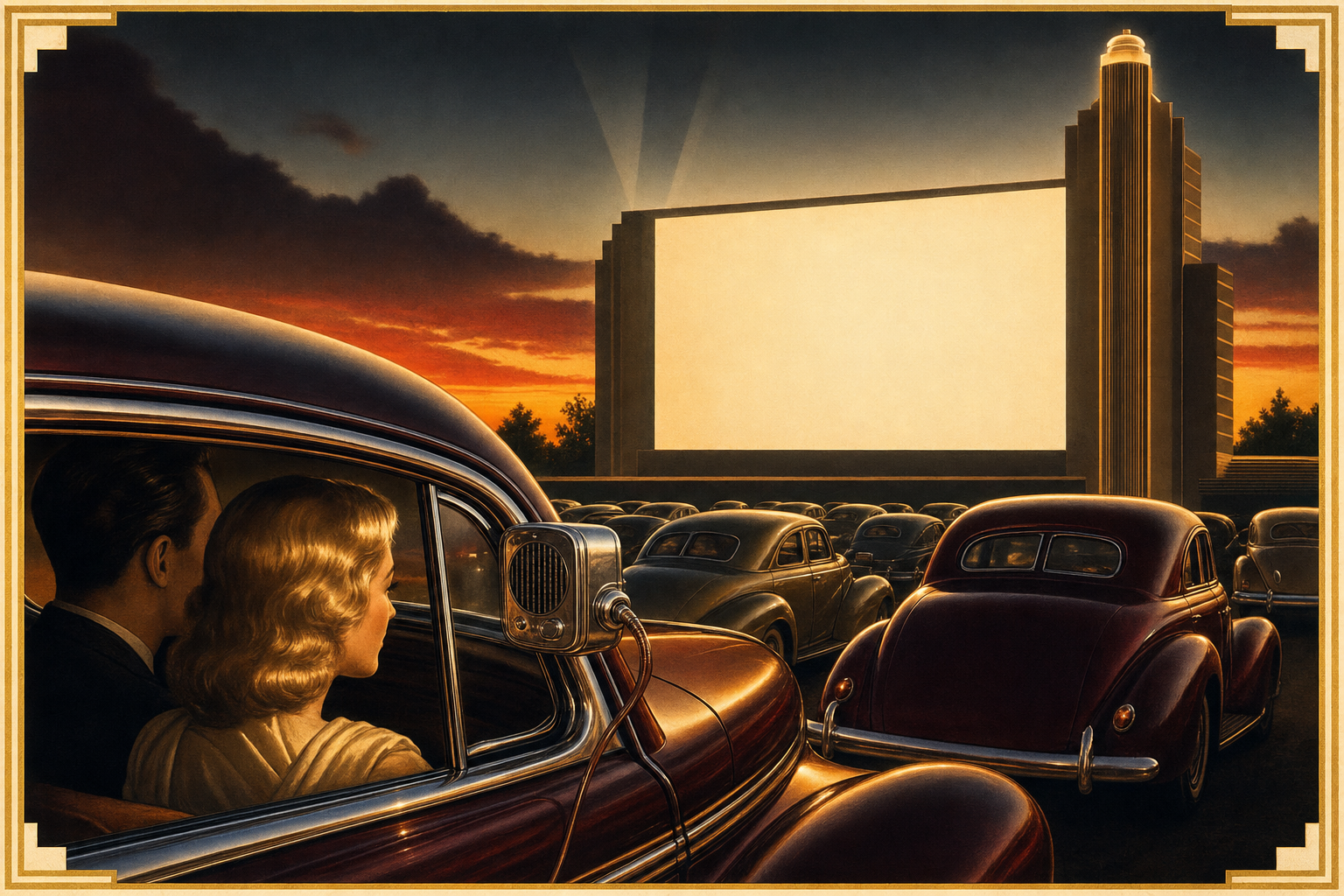
Press it and you are at the drive-in: a four-inch speaker hooked on the car door, the picture's sound arriving a moment later from across the lot. Not a filter - another playback system.
-
The Bodya knock
Strike it and the machine eats a little film. The motor sags nearly by half with a wobble in it, everything riding on that motor goes down with it, and about two seconds later the splice snaps the transport home with a soft pop.
Scenes & Places
Production Notes
The chain is the real chain, in the real order. A ribbon microphone, a tube stage, an optical print, a projector transport, and a room - each one computed, each one standing where it actually stood. Nothing here is a reverb impulse of a cinema or a loop of crackle laid over the top; the noise and the instability arrive from the parts that would have made them.
The breathing is the tell nobody puts in. Optical noise reduction gated the hiss down in the quiet, so a real print inhales when the music starts. Once you have heard it you cannot hear a print without it.
Wound all the way down, it does nothing at all. At zero on all three the signal passes untouched - the whole chain fades in rather than merely running quietly, which means the pedal has an honest off inside its on.
Everything mechanical shares one motor. Jam the film and the claw ticks slower, because the tick comes off the same motor state the programme's pitch does. Knock it and both stutter together. There is no arrangement of the controls that lets the picture and the sound disagree.
The numbers are the machine's own. Twenty-four frames a second times four perforations is ninety-six flutter events a second - it could not have been any other number. The optical roll-off is the published Academy characteristic: flat through the middle, eighteen decibels down by eight kilocycles.
Fits any pedalboard. Requires no splicing, no carbon, and no projectionist. Nothing recorded, nothing pasted on - just the machine. Ninety-nine cents.
Now Booking
BOOTH
Strike the arc, then pick a reel - or plug your own instrument in and run the machine yourself. Drag the knobs. Hold the footswitch and let the film jam.
Presented by Untamed Audio · Written and built by Joshua Rideout · The entire signal chain computed in C++ · Ribbon proximity and presence after the measured curves · Optical density after the published Academy characteristic · Crackle after Godsill & Rayner, Esquef, and Moliner & Välimäki · Transport arithmetic after the machine itself · Patrons are reminded that the management cannot be responsible for pitch during a jam · Kindly hold the footswitch down anyway